Nobody thinks about their AC in November. The unit sits outside collecting leaves, the indoor equipment stays quiet, and the coils are the last thing on your mind. Then the first hot afternoon arrives, the system runs for hours and the house still won't cool down.
That's often a coil problem. HVAC coil cleaning gets skipped because you can't see the dirt building up. The system just runs a little longer each season to make up for it, and you find out when the energy bill jumps or the air feels lukewarm.
Winter is a decent time to deal with it, before the first hot week catches you off guard. Below is what coils do, how often they need cleaning, how the work gets done and what pushes the price around.
What Is HVAC Coil Cleaning?
HVAC coil cleaning means removing dust, grime, pollen and other buildup from the evaporator coil and condenser coil in your air conditioner or heat pump. When coils are clean, they pass heat along the way they should. When they're dirty, they don't, so the system runs longer and works harder to hit the temperature you set.
You'll also hear it called AC coil cleaning. Same job, different label. Which name gets used usually depends on the coil: evaporator coil cleaning for the indoor one, condenser coil cleaning for the outdoor one.
It's more careful work than it sounds. The fins on a coil are thin metal and they bend if you look at them wrong. The indoor coil is also hidden behind panels in a cramped spot. So a technician usually has to open things up, look around and use cleaners made for coils, not whatever's under the kitchen sink.
Evaporator Coil vs. Condenser Coil
The evaporator coil is indoors, typically in or above your furnace or air handler. Air passes over it and loses heat and moisture. It stays damp during cooling season, so whatever dust slips past the filter sticks to it.
The condenser coil is in the outdoor unit and gets rid of the heat the system pulled out of your house. Outside, it picks up grass clippings, leaves, pollen and cottonwood fluff. See a gray, fuzzy mat on the side of the unit? That's your condenser coil.
Heat pumps swap jobs with the seasons. The outdoor coil acts as the condenser in summer and as the evaporator in winter. Either way, it needs to stay clean.
Why Dirty Coils Cause Problems
Dirty coils cause trouble because a layer of grime works like insulation and blocks airflow. Heat has a harder time moving in or out of the refrigerant, so the system runs longer to get the same result. You can end up with weaker cooling, higher energy use and extra wear on parts like the compressor and fan motor.
Picture trying to cool off while wearing a winter coat. The coil's job is to move heat, and the dirt is in the way.
On the indoor side, a dirty evaporator coil restricts the air moving across it. The coil can get too cold and start to ice over, and once ice forms, airflow drops even further. A frozen coil doesn't always mean dirt, though. A clogged filter or low refrigerant can do it too, so a technician needs to take a look before anyone assumes.
Outdoors, the problem is different. A clogged condenser coil can't shed heat very well. The AC keeps running, the thermostat keeps asking for more, and the house stays warm. You've probably seen that movie in July.
Signs Your HVAC Coils Need Cleaning
Common signs are weak airflow, long run times, rising energy bills and a house that won't cool properly. You might also spot ice on the indoor coil or dirt and debris packed into the outdoor unit. Any one of these is worth a closer look.
- Vents blow weaker than they used to
- The AC runs for hours and the house still feels warm
- Your energy bill went up and nothing else changed
- Ice or frost on the indoor coil or refrigerant lines
- Visible dirt, lint or leaves caked on the outdoor unit's fins
- Some rooms take far longer to cool than before
Plenty of these overlap with other problems. Weak airflow can come from a clogged filter, a blocked return or leaky ductwork. If the coils turn out to be clean and the vents are still weak, ask about HVAC air duct sealing, because air leaking out of the ducts before it reaches the room is a separate issue from a dirty coil.
The annoying part is that the indoor coil is out of sight. If the symptoms fit and the outdoor unit looks fine, the dirt could still be hiding indoors.
How Often Should HVAC Coils Be Cleaned?
It depends on your home, so there's no one schedule. Plenty of homeowners get the outdoor condenser coil checked and cleaned about once a year, often in spring before cooling season. The indoor evaporator coil usually needs it less often, though your filter habits, pets, house dust and the system itself all play a part.
Some things push the schedule up. Trees, cottonwood and long grass around the outdoor unit mean more debris. Pets add hair and dander. Renovation dust and a filter that's been sitting for months send more dirt toward the indoor coil. And if you live close to the water on Long Island, salt air can wear on outdoor equipment over time.
The filter matters more than people expect. A clean one catches a lot of dust before it reaches the indoor coil. Check it monthly and swap it as often as the manufacturer says. Forgetting the filter is one of the quickest routes to a dirty evaporator coil.
The simplest way to know where you stand is a yearly tune-up. During an HVAC system inspection, a technician can look at both coils, check airflow and tell you whether cleaning is due or can wait another year. Cleaning a coil that doesn't need it wastes money. Skipping one that does is just as bad.
How Does HVAC Coil Cleaning Work?
A technician shuts off power, removes access panels, inspects the coil, then cleans it with a brush, vacuum and a coil cleaner made for HVAC use. The outdoor coil is usually rinsed with water. The indoor coil gets more careful treatment, since the water needs somewhere safe to go. Then the system is put back together and tested.
Cleaning the Condenser Coil
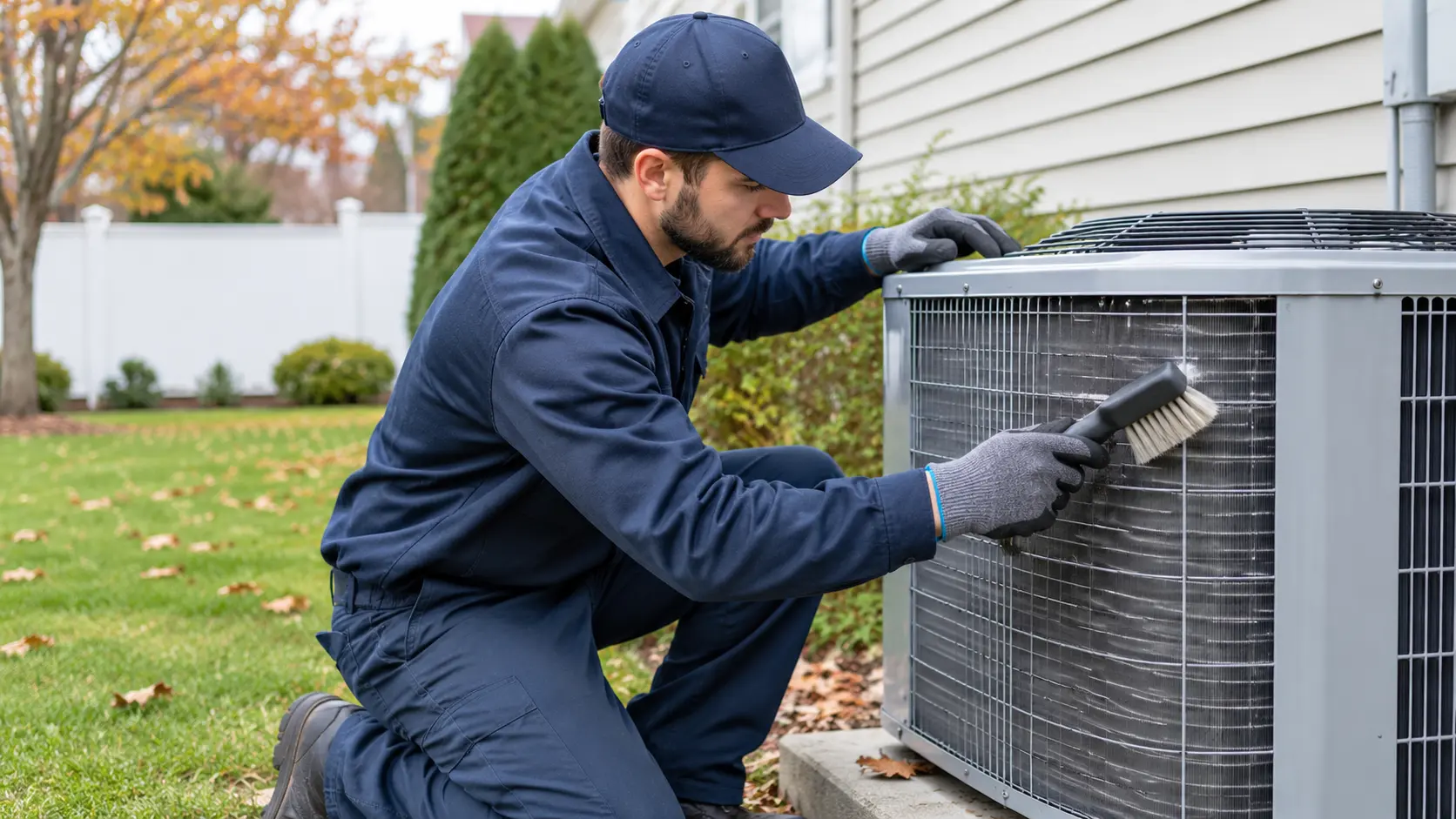
The tech clears leaves and debris from around the unit first. Then the fins get a gentle brush or vacuum, and coil cleaner goes on if the buildup calls for it. Rinsing usually runs from the inside out, so the dirt leaves the way it came in instead of going deeper into the coil.
Water pressure matters here. Fins are thin aluminum, and a hard blast flattens them. Flattened fins block air, which is exactly what you're trying to fix. If some are already bent, a fin comb can straighten them.
Cleaning the Evaporator Coil
This one takes more work. The coil lives inside the air handler or plenum, so the tech opens things up to see what's going on. Dust gets brushed or vacuumed off, then a cleaner made for evaporator coils goes on. Many of these are designed to wash away with the condensate that drips off the coil during normal running. The drain pan and condensate line get checked as well, since anything that washes off has to have somewhere to go.
People often mix this up with ductwork. Cleaning the coil doesn't clean your ducts. They're separate parts of the system, and air duct cleaning is its own job.
Once everything's back together, the tech restores power and makes sure air is moving the way it should.
Can You Clean HVAC Coils Yourself?
You can handle some basic upkeep on the outdoor unit, like clearing leaves and gently rinsing the outside fins with a garden hose. Deeper coil cleaning, especially on the indoor coil, is better left to a professional. The parts are delicate, electrical components sit nearby and it's easy to damage something.
If you're doing the outdoor basics, shut off the power at the disconnect and the breaker first. Clear leaves and debris from around the unit. Use a soft brush and a regular garden hose on a gentle setting. Leave the pressure washer in the garage.
Skip homemade mixes and harsh household cleaners too, since some of them can damage the metal.
The indoor coil is a different story. Those panels are sealed for a reason, and behind them you've got wiring and a drain system. Put a panel back wrong and you can leak conditioned air. This is the point where most people should pick up the phone.
What Affects the Cost of HVAC Coil Cleaning?
Cost depends on the type of coil, how easy it is to reach, how dirty it is, the size of your system and whether the property is residential or commercial. Location plays a part too. Since every system is different, the most accurate number comes from a quote after the technician understands your setup.
Several things move the price:
- Indoor evaporator coils usually take more work to reach than outdoor condenser coils
- A coil behind a tight panel, in an attic or in a crawl space takes more time
- Light dust and years of caked on grime are very different jobs
- Bigger systems have more coil surface to clean
- Commercial systems tend to be larger and more complicated than residential ones
- Travel and access to the property can affect the price too
We're not going to throw out a number, because any figure would be a guess. Two houses on the same street can have completely different systems. The fair way to price the work is to look at the system first, and a good tech will tell you what they found and what they plan to do before they start.
When Should You Call a Technician?
Call a technician when the symptoms don't go away after a filter change, when you see ice on the indoor coil, or when the outdoor coil is clogged beyond what a gentle rinse can handle. Anything that involves opening the air handler or bent fins should be checked by a pro, not guessed at.
Say you changed the filter, cleared the leaves off the outdoor unit and the AC still can't keep up. You've done the easy part. Something else is going on, maybe the indoor coil, airflow, refrigerant or an electrical issue, and guessing just costs you time and comfort on a hot day.
When you call, tell the technician what you've noticed and when it started. Mention the filter, how old the system is if you know, and whether you've seen ice. Small details like that help them find the problem faster.
FAQs
Is HVAC coil cleaning the same as air duct cleaning?
No. Coil cleaning targets the evaporator and condenser coils. Air duct cleaning deals with the ductwork that carries air around your building. Both can affect airflow, but they're separate jobs with different tools. A technician can tell you which one your system needs, or whether it needs both.
Can dirty coils make my AC freeze up?
Yes, they can. A dirty evaporator coil restricts airflow and can let the coil get too cold, which leads to ice. But a clogged filter, a blocked return or low refrigerant can cause the same thing. If you see ice, turn the AC off and call a technician instead of chipping at it.
Does coil cleaning lower energy bills?
It can help. Clean coils let heat move the way the system was designed to, so the equipment doesn't need to run as long to reach your set temperature. How much you notice depends on how dirty the coils were and the condition of the rest of the system. Nobody can promise a specific number.
How long does HVAC coil cleaning take?
It varies with the system, how easy the coils are to reach and how dirty they are. A basic outdoor cleaning is generally quicker than getting into an indoor coil. Rather than guess at hours, a technician can give you a realistic estimate once they've seen your setup.
When is the best time to clean my coils?
Before the season your system works hardest. For an AC, that usually means spring, ahead of the first real heat. Heat pumps run in both seasons, so spring or fall both work. And if you're already seeing warning signs, don't wait for the calendar.
Worth Doing Before Summer
HVAC coil cleaning is easy to forget because the coils are out of sight, but dirty ones make everything else in the system work harder. If you're due, the cooler months are a good time to book it, while the AC is idle and nobody's sweating.
Check your filter, look over the outdoor unit, and ask whether your system needs a coil check before spring. If you'd like a professional to take a look, visit our HVAC coil cleaning page and request a quote, or call (631) 656-3315. SaniTech Services is a professional HVAC service in Long Island, NY.
Need Professional Help?
Get a free, no-obligation quote from our NADCA-certified team.
Get a Free Quote