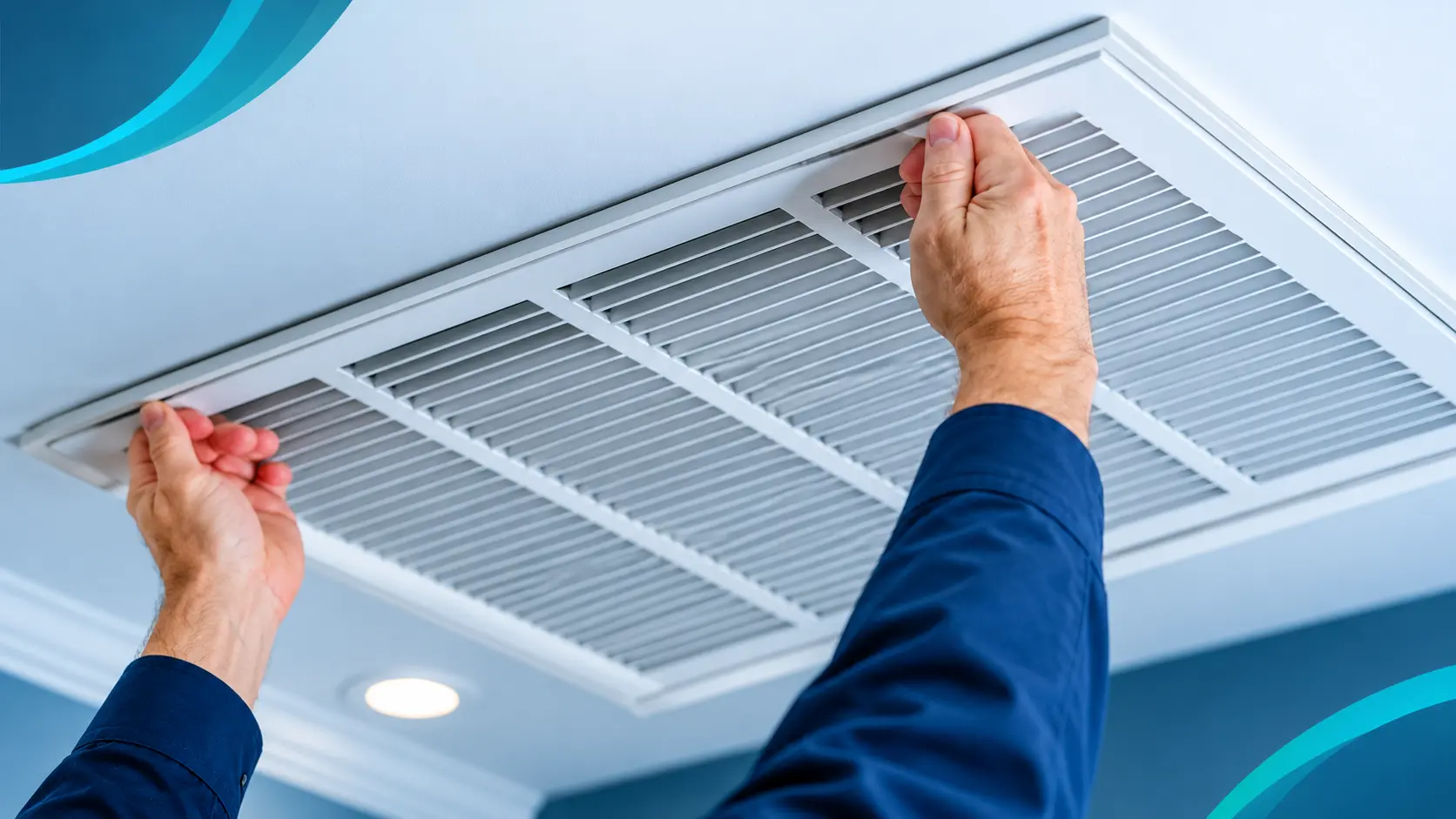
When was the last time you looked inside your dryer vent? Or your air ducts? Most people never have. Both systems hide behind drywall and above ceilings, doing their job out of sight, and we only think about them when the towels need a second cycle or the house smells like a damp basement.
That's the usual story behind air duct and dryer vent cleaning. Nobody plans for it. Something feels off, a homeowner makes a call, and the technician finds years of buildup. It isn't a fun job to think about. But it lowers your fire risk, it can make the house more comfortable, and it often trims your energy bills a little.
What Builds Up Behind the Walls
Air ducts
Your furnace and air conditioner push air through a maze of tubes all year. The filter stops a lot of what's in that air, but plenty gets by. Dust, pet hair, pollen, and tiny fibers settle on the duct walls and stay there.
Renovations make it worse. If a contractor sanded drywall while your system was running, some of that powder went straight into the open registers. And on Long Island, where summers are sticky, damp air can mix with the dust in a duct. That's where mold likes to start.
Dryer vents
The dryer vent has a different problem. Every load sheds lint. The screen catches most of it, but the rest rides the hot air down a pipe toward the outside wall. If that pipe is long or full of turns, lint slows down and piles up in the corners.
Sometimes the blockage isn't lint at all. Birds nest in exterior vent openings more often than you'd think, and a nest can shut off airflow completely.
Dryer Fires Are Mostly Preventable
If you only take one thing from this article, take this part. Dryers start thousands of house fires across the country each year, and the National Fire Protection Association (NFPA) says the top cause is simple. Nobody cleaned them.
The physics is easy to follow. A dryer heats air and pushes it through damp clothes, then that air needs to leave your house. When the vent is stuffed with lint, the heat stays trapped. Lint is dry and light, and it burns easily. Put the two together and you've got a problem waiting for a bad day.
Gas dryers carry one more risk. If the vent is blocked, exhaust gases like carbon monoxide can drift back into the home instead of heading outside.
Once the vent is packed, brushing out the lint screen won't help. A professional dryer duct cleaning visit clears the whole run, including the stretch inside the wall that you can't reach. That's the part where most of the lint hides.
Watch for these signs at home:
- Clothes need more than one cycle to dry
- The dryer or the laundry room feels hotter than usual
- You smell something burnt or musty while it runs
- Lint is collecting behind the dryer or around the outside vent
- The outside flap barely moves when the dryer is on
Any one of them is reason enough to get the vent checked. Don't wait for a scheduled cleaning.
What Dirty Ducts Do to Your Air
Your HVAC system moves the air in your home through those ducts many times a day. If the ducts are dusty, some of that dust ends up in your living room.
Now, I should be straight about the research. The U.S. Environmental Protection Agency says there's no solid proof that routine duct cleaning prevents health problems, and it points out that most household dust comes from inside the home, not from the ducts. The EPA does say cleaning makes sense in a few cases. Those are visible mold, a pest infestation, or ducts so clogged that dust and debris blow out of the vents.
That matches what many homeowners tell us. People with allergies or asthma often say the air feels lighter after a cleaning. The change is most obvious in homes with shedding pets, smokers, or a recent remodel.
You'll probably benefit most if you've just moved into a house with an unknown history, if you see dust sitting on or around your registers, or if the system gives off a stale smell every time it starts.
The Energy Bill Connection
Blocked air paths make equipment work harder. That's true on both sides of your home.
Dusty ducts restrict airflow, so your furnace or AC runs longer to hit the temperature on the thermostat. Longer run times mean a bigger bill and more wear on the blower motor. A clogged dryer vent does something similar. If a load takes two or three cycles instead of one, you're paying for extra gas or electricity every single time, and the heating element takes a beating too.
Cleaning won't fix leaky ducts or a worn-out furnace. Still, clearing a blockage is usually the cheapest way to win some efficiency back. If your cooling system seems sluggish too, ask about HVAC coil cleaning during the same visit. Dirty coils waste energy in much the same way.
Signs It's Time to Call
Your house usually drops hints before anything breaks. For air ducts, look for dust puffing out of the vents when the system kicks on, rooms that never seem to get comfortable, musty smells from the registers, or droppings and nesting material near a vent. A sudden jump in your energy bill with no change in habits is worth a look too.
For dryer vents, the clues are the ones listed above: slow drying, heat, odd smells, and lint outside. If the laundry room feels humid, that counts as well, because moist air that can't escape has to go somewhere.
How Often Should You Clean?
There's no magic number, but there are sensible starting points.
Dryer vents should be cleaned about once a year. A big family that runs laundry daily, or a house with a couple of shedding dogs, might want it every six months. Long vents with several bends clog faster, too.
Air ducts are a longer game. Many professionals suggest every three to five years. Move that up if you've done a renovation, dealt with mold, or had a pest problem.
Most people find it easiest to book air duct and dryer vent cleaning together. The crew is already there, the equipment is out, and you only have to take one morning off.
What a Good Cleaning Looks Like
A proper job doesn't look like someone waving a vacuum hose at a vent. Here's what to expect.
Air ducts
The technician starts by looking things over: registers, return vents, and as much of the ductwork as they can see. Then they hook up a strong vacuum that creates negative pressure. That pulls loosened dust out through a collection unit rather than blowing it around your house.
Rotating brushes and air tools scrub the duct walls, and the vacuum catches everything that comes loose. When the crew finishes, they should show you what they found. Damaged duct sections or signs of moisture deserve a conversation. Mold is a separate matter and needs its own treatment, so it shouldn't be lumped in with a standard cleaning.
Dryer vents
First the technician pulls the dryer away from the wall and checks what the vent is made of. Foil or plastic flex pipe is a bad sign. The ridges inside catch lint, and the material can sag or tear. Rigid metal is the better choice.
A rotating brush then runs the full length of the vent while a vacuum pulls out the lint. They clean the outside hood, check that the flap moves freely, and hook everything back up. A careful tech will finish by testing the airflow.
For an average home, both jobs together usually take a few hours. Bigger houses or heavily clogged systems can take longer.
Can You Do It Yourself?
Partly. Everyone should clean the lint screen after every load, and vacuuming around your registers helps too. A dryer vent brush kit works fine on a short, straight run.
Problems start when the job gets bigger. Plenty of vents run fifteen or twenty feet through walls and ceilings with a few turns along the way. A brush on a flexible rod can push lint deeper, snap off inside the pipe, or dent a section you can't see. As for ducts, a household vacuum might clean the first few inches of a register. It can't reach the main lines, and it can kick dust back into the room.
The other missing piece is inspection. A trained person notices a crushed vent, a loose joint, or a damp patch. Most homeowners wouldn't spot any of that on their own.
Picking the Right Company
Not every company that advertises air duct and dryer vent cleaning does it well. Some quote a ridiculously low price for the whole house, then push add-ons once they're inside. A few questions can save you from that.
Ask whether the technicians are trained. Membership in the National Air Duct Cleaners Association (NADCA) is a good sign, and so are credentials like Air Systems Cleaning Specialist (ASCS) and Certified Ventilation Inspector (CVI). Ask about equipment, since negative pressure collection and HEPA filtered vacuums should be standard. Get the price and the scope in writing before anyone starts. And pay attention to how they talk to you. A good company shows you what it found and lets you decide.
SaniTech Services has been cleaning air ducts and dryer ducts on Long Island and around New York State since 1997. It's a family-owned business, a NADCA member, and its technicians hold ASCS, CVI, and ventilation system mold remediation certifications. The same crew also works in schools, healthcare facilities, and large buildings through commercial air duct cleaning, so the equipment is built for jobs much bigger than a single house.
Small Habits Between Visits
A few easy routines slow the buildup:
- Clear the lint screen every load
- Replace or wash your HVAC filter every one to three months
- Check outside once in a while to see that the dryer flap opens and closes
- Keep the dryer vent short and straight, with rigid metal pipe instead of foil
- Turn the dryer off when you leave the house
- Keep furniture and rugs off the supply and return vents
None of it takes long, and together they stretch the time between professional cleanings.
FAQs
How often should I clean my dryer vent?
Once a year works for most homes. If you do laundry nearly every day, have pets, or notice longer drying times, go with every six months. And if the dryer runs hot or smells like something is burning, get it checked right away.
Is air duct cleaning really worth it?
It depends on the house. It pays off after a renovation, when there's mold or pest activity, or when dust and debris are visibly coming out of the vents. If your ducts are in good shape and nobody has allergy problems, you can probably wait. A quick inspection will tell you which group you're in.
How long does air duct and dryer vent cleaning take?
A dryer vent usually takes 30 to 60 minutes. Air ducts take longer, often two to four hours for an average home, depending on size and the number of vents. Doing both in one visit saves you a second appointment.
Can I clean my dryer vent myself?
You can handle the lint screen and a short, straight vent with a brush kit. Longer runs or vents with bends are better left to a professional, since a kit can pack lint deeper or damage the pipe. A technician can also inspect the whole run for crushed or loose sections.
Will cleaning my ducts stop dust in my house for good?
No, and be wary of any company that promises that. Most household dust comes from fabric, skin, pet hair, and outside air. Clean ducts remove one source and help air move more freely, but you'll still need to dust. Changing your filters on time keeps the ducts cleaner for longer.
Ready to Get It Checked?
Clean ducts and vents do a quiet job. You get better airflow, lower energy use, and one less thing to worry about. Clogged ones give you higher bills, stuffy rooms, and in the worst case, a fire.
If it's been more than a year since anyone cleaned your dryer vent, or you can't remember the last time someone looked inside your ducts, it's a good time to book. SaniTech Services is based in Hauppauge and serves Nassau County, Suffolk County, and all five boroughs of New York City. Quotes are free with no obligation. Call (631) 656-3315 or request a quote online to set up an inspection.
Need Professional Help?
Get a free, no-obligation quote from our NADCA-certified team.
Get a Free Quote