HVAC Air Duct Cleaning on Long Island & NYC
NADCA-Certified Source Removal for Cleaner Indoor Air
HVAC air duct cleaning is the mechanical removal of dust, debris, and microbial contamination from a building's supply and return ducts, air handler, coils, and registers. SaniTech Services provides NADCA-standard air duct cleaning Long Island and New York City homes, offices, schools, and healthcare facilities can schedule, following NADCA's ACR Standard and EPA guidance: inspect first, clean when the inspection shows it is needed.
SaniTech Services is a NADCA member company based in Hauppauge, serving Nassau and Suffolk counties and all five boroughs of New York City. Our ASCS-certified technicians clean the entire system, not just the ducts you can see, and document the condition before and after so you have verifiable proof of the work.
If you are not sure whether your ducts need cleaning, start with an inspection. We will tell you what we find, even if the answer is that cleaning is not needed yet.
When to Inspect vs. When to Clean
NADCA's ACR Standard separates inspection (scheduled) from cleaning (triggered by what the inspection finds). The U.S. EPA takes the same position: duct cleaning is not recommended as a routine service, but is warranted when there is visible mold, a pest infestation, or ducts clogged with excessive dust and debris.
| Inspect on a schedule | Cleaning is warranted when | Cleaning alone won't fix it |
|---|---|---|
| Air handling units: on the interval NADCA's ACR Standard recommends for your building type, always on the shorter end for healthcare and high-occupancy buildings. | Inspection finds significant dust or debris loading on duct and component surfaces. | There is active moisture from a leaking coil, drain pan, or roof — the water source must be corrected first. |
| Supply and return ductwork: on a longer cycle than the air handler under NADCA ACR; industrial and healthcare systems more often. | Visible microbial growth on system surfaces, or a confirmed finding of settled spores or active growth (Condition 2 or 3). | Mold in occupied spaces that is not coming from the HVAC system — that is a building remediation issue. |
| After any renovation, fire, flood, or water intrusion affecting the system. | Debris, dust, or odors are discharging from supply registers into occupied space. | Pest or rodent activity — entry points must be sealed and treated before cleaning is meaningful. |
| Whenever occupants report air-quality complaints tied to system operation. | Post-construction dust, or a system that has never been cleaned since installation. | Undersized or neglected filtration — the filter and maintenance program must change too, or contamination returns. |
Is Air Duct Cleaning Worth It?
It depends on what an inspection finds. Duct cleaning helps when there is a real contamination source inside the system: heavy dust and debris loading, construction dust, microbial growth on duct surfaces, pest debris, or contaminants visibly blowing out of registers. In those cases, NADCA-standard source removal restores the system to a clean baseline and gives you documentation of the result.
It does not help as a routine, calendar-based purchase. The EPA states that duct cleaning has never been shown to prevent health problems on its own, and does not recommend cleaning ducts routinely — only when there is visible mold, vermin, or excessive debris. If moisture is the underlying problem, the leak, condensation, or drainage issue has to be corrected first or contamination will come back.
That is why we start with an inspection rather than a sales pitch. If your system does not need cleaning, we will say so and recommend what will actually help — filtration, coil cleaning, duct sealing, or a maintenance schedule.
What a NADCA-Standard Cleaning Includes
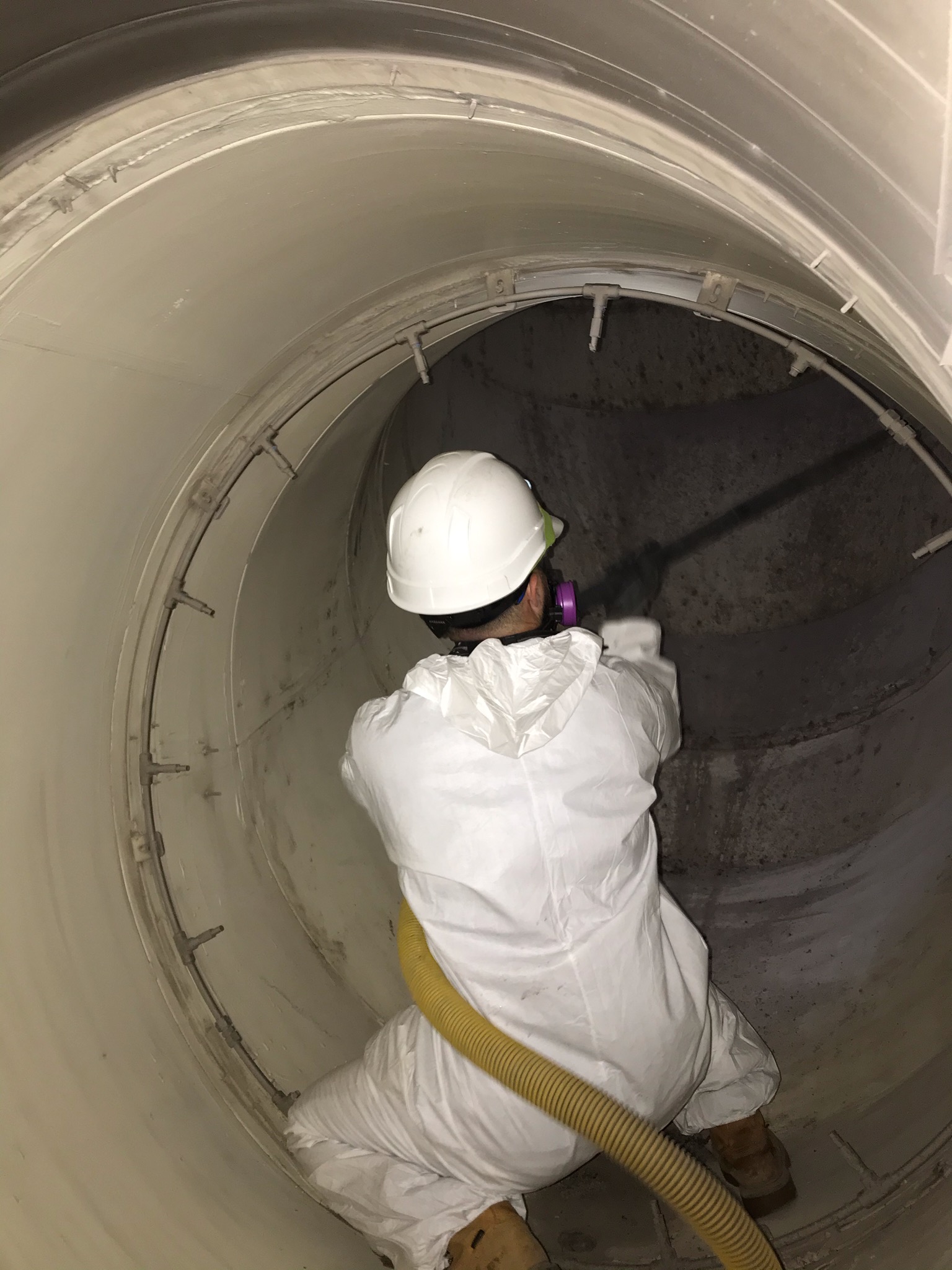
A whole-system cleaning cannot be completed in an hour with a shop vacuum at a register. If a quote does not include the air handler, coils, and both the supply and return sides of the system, it is not a NADCA ACR cleaning. Our ASCS-certified crews perform every project the same way:
- Mechanical agitation of duct surfaces with rotary brushes, air whips, or skipper lines to dislodge debris.
- HEPA-filtered negative-air machines placed under containment so dislodged material is captured, not redistributed.
- Full system scope: supply and return ducts, air handling unit interior, evaporator coil, condensate drain pan, blower and housing, registers, grilles, and diffusers.
- Access openings closed with proper duct plugs or panels, and system components returned to operating condition.
- Before-and-after photo documentation and a written report of the work performed.
Residential vs. Commercial Air Duct Cleaning
The same NADCA method applies to a Long Island home and a Manhattan office tower, but the scope, access, and paperwork differ:
- Residential: one or two air handlers, a half-day visit, and a homeowner report. Common triggers are renovation dust, buying an older home, visible debris at registers, or a moisture event.
- Commercial and institutional: multiple air handlers and rooftop units, occupied-floor containment, after-hours or summer-break scheduling, and reports written for facility directors, public agencies, and insurers.
Service Area
SaniTech Services is based in Hauppauge and serves Long Island, including Nassau and Suffolk counties, and New York City. Contact our team to discuss your property, system and scheduling needs.
Meet our team and review our credentials·Request a free quoteOur Process
System Assessment
We inspect your HVAC system, identify contamination levels, and develop a customized cleaning plan.
Access Point Setup
Strategic access points are created to ensure complete coverage of the entire ductwork system.
Source Removal
Using negative air machines and rotary brushes, we dislodge and extract all contaminants from the duct surfaces.
HEPA Vacuuming
HEPA-filtered vacuums capture particles as small as 0.3 microns, ensuring nothing re-enters your air supply.
Verification & Report
Post-cleaning inspection with before-and-after photos and a detailed report of work performed.
Key Benefits
Frequently Asked Questions
How often should air ducts be cleaned on Long Island or in NYC?
Only when an inspection shows they need it. NADCA's ACR Standard sets recommended inspection intervals that vary by building type and component, with healthcare and high-occupancy buildings inspected more often than typical offices, and calls for cleaning when the inspection finds debris loading, microbial growth, contaminants discharging from registers, or damage from construction, fire, or water. The EPA likewise recommends cleaning only for visible mold, pest infestation, or ducts clogged with excessive debris.
What is NADCA source removal, and why does it matter?
Source removal is the NADCA method that physically removes contaminants from duct surfaces instead of masking them. Technicians agitate the duct interior with rotary brushes, air whips, or skipper lines while HEPA-filtered negative-air machines pull the dislodged debris out of the system under containment. It is the method NADCA's ACR Standard requires, and it is why a whole-system cleaning takes hours, not minutes.
Will air duct cleaning disrupt my business or building?
Usually not. Commercial work is scheduled around occupancy: nights, weekends, holiday breaks, or planned shutdowns, with occupied floors isolated by containment so dust never reaches staff or tenants. A typical residential cleaning takes three to five hours. Schools and healthcare facilities are commonly cleaned during recess or in phases so the building stays in use.
Does the service clean the whole HVAC system or just the ducts?
The whole system. A NADCA-standard cleaning covers supply and return ducts, registers, grilles, and diffusers, plus the air handling unit interior, blower and housing, heat exchanger, cooling coil, and condensate drain pan. If a quote leaves out the air handler and coils, it is not a full-system cleaning.
What certifications should an air duct cleaner on Long Island have?
Look for NADCA membership and an ASCS (Air Systems Cleaning Specialist) certification, which is earned by examination and maintained with continuing education. SaniTech Services is a NADCA member company with ASCS-certified technicians and a Certified Ventilation Inspector (CVI) on staff, and you can verify our membership in NADCA's public directory.
Get a Free Quote
Fill out the form and we'll respond within 24 hours.