Most of us never think about our ducts. The system turns on, air comes out, and the house feels fine. Then one afternoon you spot a gray film on the dresser an hour after you dusted, or the guest room smells like a closed-up basement, and you start to wonder what is going on inside the walls.
That feeling is worth listening to. If you are researching air duct cleaning East Hampton, this guide covers the signs that a system really does need attention, the ones that look alarming but usually are not, and what happens when a professional shows up. It also covers when cleaning will not help, because it does not fix everything.
Why Ducts in East Hampton Homes Need a Closer Look
Your ductwork collects whatever your house puts into the air. Pet hair, skin flakes, pollen, fibers from carpets and bedding, and dust from remodeling all get pulled into the return vents. Some of it settles in the ducts and around the blower. In a home that people live in all year, this happens slowly.
East Hampton adds a few twists. Many homes on the East End are seasonal or second homes that sit closed for months. A system that runs hard in July, rests all winter, and starts up again in May can push out stale air and settled dust on that first run. Coastal humidity matters too. Damp air plus dust is a good recipe for odors and, in the wrong spot, for mold. And a lot of local houses are older, with original ductwork that has been through several owners and a few renovations.
None of this means every house needs a cleaning. It means East Hampton homeowners have good reasons to look at their vents once in a while.
Signs Your Vents Need Attention
No single sign proves anything on its own. Two or three together are a much better reason to pick up the phone.
Dust That Keeps Coming Back
You dust on Saturday and the shelves look dull again by Tuesday. A little of that is normal. But if dust returns within days, especially near the vents, the system may be pushing it back into the room. Check your filter first, since a clogged one causes the same problem. If the filter is fine and the dust still shows up, the ducts are a fair suspect.
Debris You Can See at the Registers
Grab a flashlight and look inside a vent cover. Thick gray dust, lint clumps, or loose debris near the opening usually means there is more deeper in. You are only seeing the first few inches. Dark, fuzzy edges around a supply register are another clue, though they can also be surface dirt, so look closely before you decide.
A Musty or Stale Smell
If a smell appears when the system kicks on, the ducts or the equipment are a good place to start looking. A musty smell usually points to moisture. A dusty, stale smell, especially after the house has been shut up for a while, points to buildup. One caveat: a faint burning-dust smell on the first heating day of the season is common and fades fast. A smell that sticks around is not.
Allergy Symptoms That Ease When You Leave the House
Sneezing, itchy eyes, and a stuffy nose that get better when you are away from home can have many causes, including pollen, pets, and bedding. Ducts are only one possibility. Still, if symptoms seem to flare when the system runs, have someone take a look. If they persist, mention them to your doctor too.
Rooms With Weak Airflow
When one room never gets comfortable, a blockage in the duct could be part of the reason. So could a closed damper, a leak, or a tired blower motor. This is where an HVAC system inspection pays off, because it tells you which problem you actually have before you spend money on the wrong fix.
A Recent Renovation or Water Damage
Sanding drywall, tearing out flooring, and painting all create fine dust, and open registers pull it right in. If you remodeled recently and did not cover the vents, your ducts probably took a hit. Water damage near the furnace, air handler, or ductwork is a different matter. Moisture inside the system is a bigger concern than dust, and it should be dealt with quickly.
Pets, Smoke, and Finished Basements
Fur and dander build up faster in homes with pets. A smoker in the house leaves a sticky residue that dust clings to. Finished basements often have return vents low to the floor, where they pull in lint and grit. If any of these describe your house, the ducts tend to get dirty sooner than average.
Signs of Pests
Droppings, shredded nesting material, or a dead-animal smell near a vent are all reasons to call for help. Mice and other pests can get into ductwork through gaps in the system. This is not a do-it-yourself job.
Mold You Can See
If something that looks like mold is growing on a register or inside a duct, do not just scrub it off. Mold needs moisture, so the real task is finding and fixing the source. Cleaning without fixing it means the mold comes back. Have a professional assess it first.
A Ten Minute Check You Can Do Yourself
Before you book anything, walk through the house with a flashlight:
- Look into two or three supply and return vents in different rooms
- Check the filter. If it is gray and packed, replace it and see whether the dust improves
- Run the system and notice any smell in the first few minutes
- Hold a hand near each room's vents to compare airflow
- Step outside and make sure the dryer exhaust flap opens and no lint is piled around it
Take a few phone photos while you go. They help a technician understand what you are seeing, and they give you something to compare against later.
Opening Up a Seasonal Home
If you only use your East Hampton house in summer, the start of the season is a natural time to check the system. Do the walk-through above before you move back in. Run the system for a few minutes with the windows open to clear the first blast of stale air, and look for any sign of moisture around the equipment after a damp winter. If something looks off, it is much easier to deal with before the house is full of guests.
What the EPA Says About Duct Cleaning
The EPA does not recommend routine duct cleaning. Its guidance is to clean when there is a reason, such as visible mold, pests, or heavy dust and debris blowing out of the supply registers. We agree with that. It is why this guide focuses on signs instead of telling you to book a cleaning every year.
So if your system runs well, nobody in the house has symptoms, and the registers look clean, you can probably wait. An inspection is a simple way to confirm that. If you recognize several of the signs above, the case for cleaning gets much stronger.
It also helps to know what cleaning cannot do. If your ducts leak, or the underlying problem is moisture, cleaning alone will not solve it, and sealing or repair may be the better next step. A dirty filter can undo a fresh cleaning in a few weeks, so change it on schedule.
What a Proper Cleaning Includes
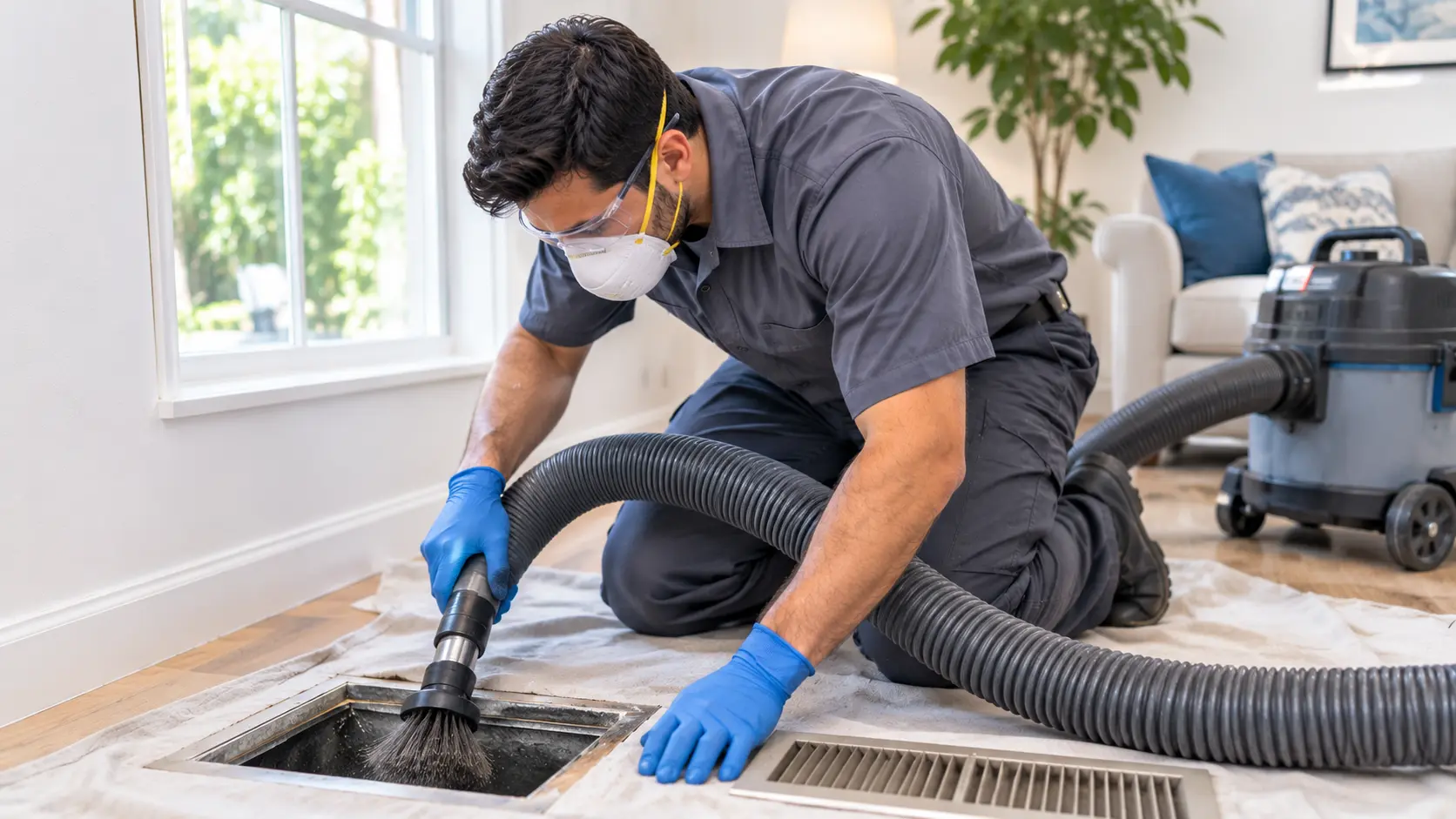
A real duct cleaning goes through the whole system, not just the grilles. Reputable companies follow the NADCA standard for assessment, cleaning, and restoration. In practice, a job should include:
- An assessment of the system before any cleaning starts
- Debris removal from inside the ducts, using NADCA-approved methods and equipment
- Coil cleaning, where it is part of the job
- A before-and-after report with maintenance recommendations
Wiping down the registers only handles the part you can see. The dust that matters sits further in, in the supply and return ducts, on the coils, and around the blower.
Price depends on the size of the system, the number of vents and returns, how easy the ducts are to reach, and their condition. That is why a flat rate quoted over the phone with no questions asked should make you pause. Before the crew arrives, clear the area around your registers and the air handler, and mention anything that is hard to reach. It saves time on the day.
Do Not Skip the Dryer Vent
The dryer duct is a separate system, and it gets forgotten more than any other. Lint builds up inside it, which is a fire hazard and makes the dryer work harder. If clothes need two cycles to dry, or the laundry room feels unusually warm and smells like hot lint, check it. It often makes sense to book dryer vent cleaning in the same visit as the ducts.
How to Choose an Air Duct Cleaner
Start with three questions. Is the company a NADCA member? Are the technicians certified? And what exactly does the price include? A very low price can mean the work that matters is left out.
SaniTech Services is based in Hauppauge, has been in business since 2011, and has completed more than 2,500 projects. We are a NADCA member and our specialists are ASCS certified. If you want to compare companies, our guide to choosing a NADCA-certified air duct cleaner on Long Island lists what to look for in more detail.
FAQs
How much does air duct cleaning cost in East Hampton?
It depends on the size of your system, how many vents and returns you have, how easy the ducts are to reach, and what condition they are in. A large home with several systems will cost more than a small cottage with one. The best way to get a real number is a free quote, so you know the price before any work starts.
How long does it take?
That depends on the size of the property and the number of systems. A small home with one system goes faster than a large house with several. Ask for a timeline when you request your quote so you can plan around it.
How often should I clean my air ducts?
There is no fixed schedule. The EPA recommends cleaning only when needed, for example when there is visible mold, pests, or heavy dust and debris. If you are unsure, an inspection can tell you whether your ducts need cleaning now or can wait. Homes with pets, smokers, recent remodeling, or long seasonal closures are worth checking more often.
Is air duct cleaning worth it?
It can be, when there is a real reason: heavy buildup, pests, mold, or a recent renovation. It is less useful as a precaution for a system that runs well. Cleaning also will not fix leaks or moisture problems, so a good company will tell you if something else is the real issue.
Can I clean my ducts myself?
You can vacuum the registers and wipe the visible parts, and that is worth doing now and then. But the dust that causes trouble sits deep in the system, and household tools cannot reach it. Poking around inside flexible ducts can also tear them. For a full cleaning, hire a professional.
Ready to Get Your Ducts Checked?
If a few of the signs above sounded familiar, a free quote is an easy next step. SaniTech Services serves East Hampton and the rest of Long Island. Call (631) 656-3315 or request a quote online, and tell us what kind of property it is, what systems you have, and when you need the work done.
Need Professional Help?
Get a free, no-obligation quote from our NADCA-certified team.
Get a Free Quote